Pages

Tuesday, 26 March 2013

15 years ago Compaq & DEC (now Hewlett-Packard) setup its Europe, Middle East & Africa centralised Technical Support Centre (naturally it wasn’t called that – it had to be called by a TLA – so it was known as TSC). The TSC had high ambitions of solving many of the intractable problems associated with 14 different countries having 14 different ways of doing the same thing – fixing product and process failures for 25 million customers.

Unfortunately, and somewhat predictably, what it initially did was spend millions of dollars industrialising the existing mess while simultaneously disenfranchising the local subsidiaries – time to hire a new sheriff! – Or could this be a case for distributed cognition?

Monday, 25 March 2013

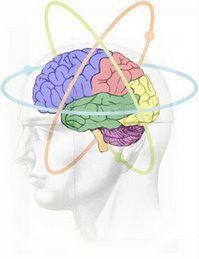
The Quanta of Mind


Quantum Mechanics. Mind. Consciousness.

From where I'm standing, the sole feature drawing these seemingly disparate terms together is my own blissful ignorance of their precise meanings and applications.
However,  the first and fourth terms, Quantum Mechanics and Consciousness, some claim, have more linking them than their mere incomprehensibility.

Splicing these two intimidatingly complex domains together, explorers in quantum theories of consciousness seek to shed light on the nature of consciousness using the wisdom peddled by quantum theory.

Body to Body


The issue of perspective is always a curious one. For those semi-familiar with video game technical jargon, the concept of first person shooter and third person shooter are fundamental to the over-all experience of the game. I always felt that the decision to place the camera behind James Bond instead of just in front of him determined whether the game would be enjoyable or just plain irritating. Imagine if you will the possibility of addressing this problem in relation to our own bodies.  


The slightly paranormal view of an out of body experience is that of the rising from the body and floating around the room perhaps in response to great physical trauma or stress. Additionally, reports attribute them to the copious use of alcohol and mind expanding hallucinatory drugs.

Sunday, 24 March 2013

Resurrection 2.0


Reductivism has greatly benefited science in that the ability to break down an area of study into a more neatly defined territory with relatively clear boundaries allows a researcher to get on with the work at hand and to have a higher hit rate of identifying that which is measurable in that set range.

However such an approach can suffer from a lack of holism and the danger of believing that the world does conveniently fit into the categories we place upon it.

A fascinating demonstration of this, as featured recently in an article in National Geographic, is the question over whether it is ethical to bring back extinct species through cloning methods.

Saturday, 23 March 2013

Neuroarthistory meets Upper Paeleolithic art

Drawing on bone from Isturitz Cave, France

Lecture at British Museum on Ice Age Art exhibition

- took place on March 15, 2013:  exhibition curator Jill Cook introduced the speakers, neuroscientist Semir Zeki and archaeologist  Clive Gamble.


Professor Gamble provided context information for the exhibition in terms of geography and population: in Western Europe, 20,000 years ago at the height of the Ice age, the population moved south; into the Dordogne, to Cantabrian Spain. The total population of Western Europe at that time was approximately 17,000 people. When the Ice Age receded and they came back,  the total population of Western Europe was 60,000.

Professor Zeki introduced the connection of art with the 'primordial need' of the brain to acquire knowledge. The application of neuroaesthetics -  the formulation of neural laws about art and aesthetics - to the objects in the exhibition revealed the importance of 'significant configurations': simple patterns that are immediately recognizable, for example, two holes and two straight lines are interpreted as a face when presented in the correct positions:  :-|

Professor Zeki said that the function of art was the communication of ideas not accessible to language, emphasising features that are important in acquiring knowledge about how to live in an environment, and how to live with each other (social knowledge).

Jürgen Schmidhuber: Low-complexity art and more!


Jürgen Schmidhuber is arguably one of the world’s most interesting researchers in AI. He is a computer scientist and artist known for his work on machine learning, Artificial Intelligence (AI), artificial neural networks, digital physics, and low-complexity art. Schmidhuber is co-director of the Swiss AI lab IDSIA in Lugano and a professor of Cognitive Robotics at the Tech University Munich. It is reported that since he was 15 years old, his main scientific ambition has been to build an optimal scientist, then retire! This is the driving force behind his research on self-improving Artificial Intelligence. Between 2009-2012, the recurrent neural networks and deep feed-forward neural networks developed in his research group have won eight international competitions in pattern recognition and machine learning. His formal theory of creativity & curiosity & fun (1990-2010) explains art, science, music, and humor. Yes, his CV is impressive, but what caught my attention in particular was his 'low-complexity art' which is reinforced and mentioned in his formal theory of creativity & curiosity & fun. 

Acquired savantism: can tDCS make you a genius?


Allan Snyder's THINKING CAP

The real 'Rain Man'

The extraordinary abilities of 'savants' became part of popular culture thanks to the film 'Rain Man'.  Dustin Hoffman's character was inspired by Kim Peek, who was born without the corpus callosum (which connects the left and right hemispheres).

Peek was able to read two pages of a book simultaneously (one page with each eye) in eight seconds, and commit them to memory with 98% accuracy. He could recall more than 12,000 books in their entirety, and he accurately summed columns of phone numbers from the phone book.

Peek was not mentally retarded or autistic, but was unable to master basic life skills. A technical consultant on 'Rain Man', Darold Treffert, MD, researched this condition for nearly 50 years, developing the theory that savant syndrome characteristically consists of left-hemisphere dysfunction combined with right-hemisphere emergence. In other words, without the restrictions imposed by the left-brain, the right-brain is free to dazzle.